Saturday, September 15, 2012

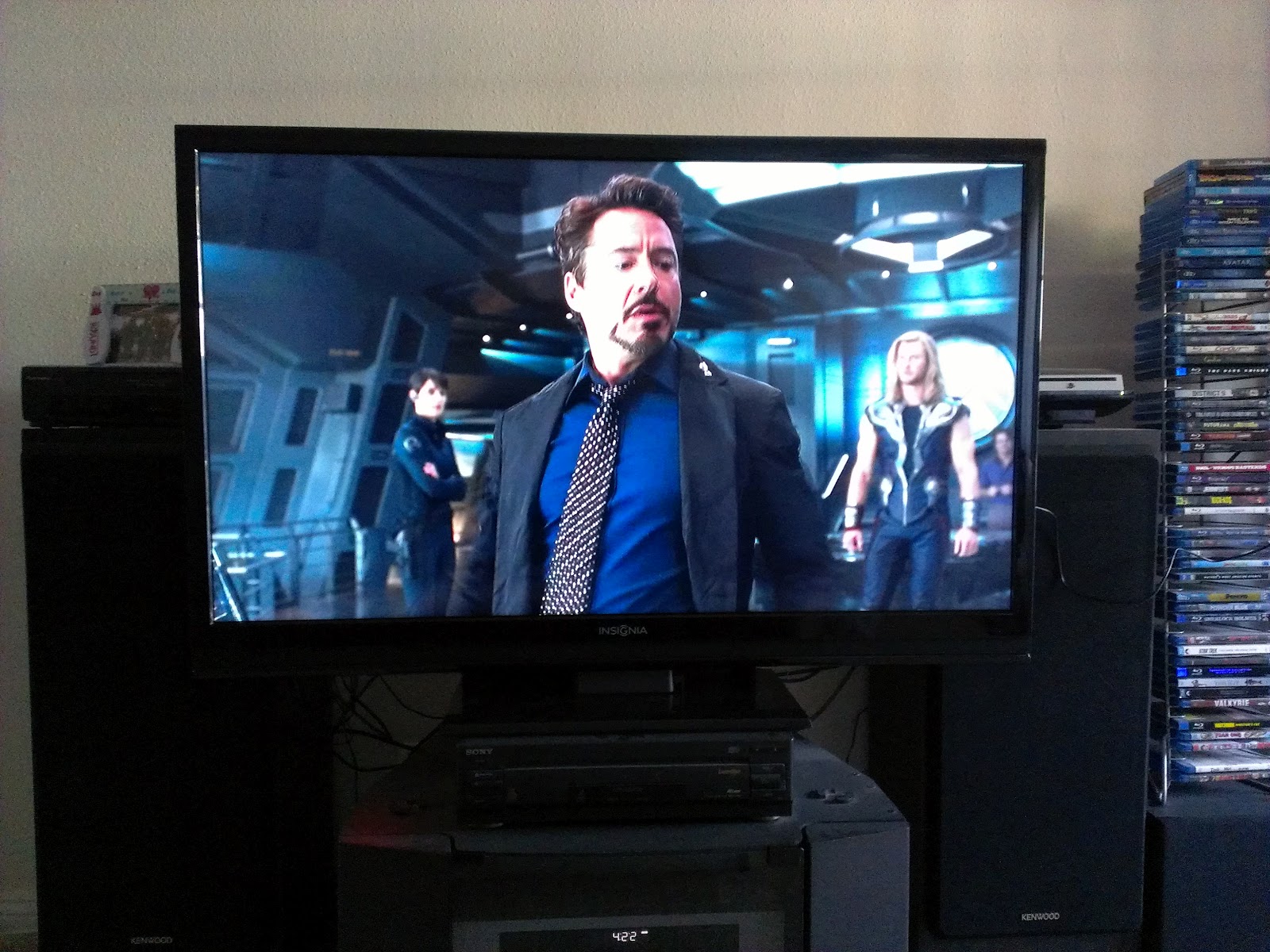
Say hello to my little friend

"Only" 60Hz. More than enough, I say.
"That man is playing Galaga. Thought we wouldn't notice. But we did."
Twisted fun.

Finally, I've upgraded the 32" TV I had in my living room to a larger 50"; it's working well, and I've moved the 32" to my room, and will retire the CRT that's been sitting in its stead, collecting dust. Gonna have to take it to a recycling place.

Thursday, September 13, 2012

iPhone 5 - "Blah"

The "big" tech news of the day is Apple's introduction of its latest iteration of the iPhone... which isn't really news, since they've pretty much all been leaked already, but Apple basically confirmed what the official changes are, over the previous iPhone 4S.

Let's take a look at these changes, shall we?

  • Bigger screen - 4 inches 16:9 vs 3.5 inches 3:2
    Two years ago, Steve Jobs ridiculed all the Android phones with bigger screens, saying that "3.5 inch handset size is the 'sweet spot' for mobile phone design; big enough to produce detailed, legible graphics, but small enough to fit comfortably in the hand and pocket." And what do we see now? A bigger screen. But Apple has a history of dismissing products it currently doesn't own a piece of, only to release a new product in that market later, and proclaim itself the innovator of that space, and rumors were already flying around last year that Apple would introduce an iPhone with a larger screen. It simply didn't arrive until this year.

    In this case, Apple is playing catch-up with the competition, where consumers are buying phones with larger and larger screens in excess of 4.5+ inches. My old phone from two years ago was 4.3 inches, with a 15:9 widescreen aspect ratio.
  • Thinner and lighter - "World's thinnest smartphone" at 7.6mm
    Not really anything innovative here, just your usual "spec bump"; smartphones seem to constantly be getting thinner and lighter, so it makes sense that a new phone being released is thinner and lighter. It does help in making a phone with a larger screen more pocketable, so the thinner design is welcomed.

    However, iPhone 5 will not be the "world's thinnest smartphone" - I'm not saying that by the time it is released, another phone will come along and be thinner. I'm saying that a thinner smartphone already exists. Chinese phone maker Huawei has a phone that's 6.8mm thin. Not that it's going to stop the hoards of Apple fanatics from taking Apple's claim as gospel. Who knows, maybe Apple will sue Huawei for keeping Apple from taking that title.
  • New CPU - Apple A6
    Supposedly twice as fast as its predecessor, the A5, Apple was mum about much of the details of the new processor. This, like the previous point, is your usual spec bump. One would hope that they've upgraded the chip to a 28nm fabrication process, which is the size of all the current Android flagship phones.

    The important thing here, though, is not really the technical specs. As long as it actually performs well, numbers don't really matter.
  • New Antenna - 4G LTE
    Did I mention that my two-year-old phone already had 4G? Granted, it was WiMAX instead of LTE, but Verizon also launched their own LTE phone more than 1.5 years ago. Talk about being behind the curve...

    My guess is that Apple probably didn't want to release a phone with LTE until after there's enough LTE coverage, and/or had a better way to manage the battery life when the LTE antenna is on. Which is understandable. But even now, there are many regions in the US not covered by any LTE network, so maybe it's strictly a battery thing.
  • New Connector - "Lightning"
    Probably the worst "upgrade" of all time. If you're going to change your connector and force all your existing customers to upgrade their accessories, why not make it a standards-compliant connector, instead of a proprietary one? And charging people $29 for an adapter that likely costs you less than $5 to manufacture is just the epitome of greed.
  • New earbuds
    Meh.
  • Updated Camera - Better low-light performance, panorama stitch mode
    As far as low light performance goes, won't know how it actually performs until the phone is released, but would be better if the actual image sensor is larger. Panorama mode has been available on Android for a while now.
  • New Map/Navigation
    This is more of an iOS 6 upgrade than an iPhone 5 upgrade--You don't necessarily have to have an iPhone 5 to get iOS 6, and maps/navigation should be part of the OS upgrade. Finally with built-in turn-by-turn navigation. Which Android has had for about 4 years... and the Android version has navigation with mass transit, a function lacking in the new iOS navigation. How innovative!
That seems to be mostly it. Looks like the iPhone is mostly playing catch-up with Android, and in some instances aren't even able to match some of the top-of-the-line Android phones. So, in short, blah.

Thursday, July 19, 2012

US Carrier Smartphone Prices

With the recent AT&T announcement that they're going to have similar data share plans as Verizon, I've decided to take some time to figure out how much each of the four national carriers would cost for family share plans.

Some things to note:
  • Even though AT&T will retain their current family share plans prices and not force you to this new data sharing plan when you sign a new contract, I have not included their current pricing in this comparison chart.
  • T-Mobile's data plan is actually "unlimited"; that is to say, you can use more than the 2GB limit in your billing period and won't be charged extra, however, your data beyond 2GB will be throttled (slow).
  • T-Mobile's non-contract prices should be lower. I did not check what they would be, however.
  • Under the new data share plans for both Verizon and AT&T, text and talk are both unlimited. So technically, the equivalent plans for T-Mobile and Sprint are their "unlimited talk" plans. However, Sprint offers "any mobile"--That is to say, with Sprint, you can call any cell phone number in the US (or receive calls), and talk for however long you want, and those minutes will be free and not part of your allotted "any time" minutes. So unless you make a lot of calls to landlines, you won't need that many minutes, making it almost the same as unlimited talk. YMMV.
  • These prices are for smartphones only. Since we're mainly concerned about the cost of data, non-smartphones need not apply. I'm also not taking tablets into account.
  • Verizon's data share plan also includes "free hotspots"; I don't know if AT&T's new plan does the same, but Sprint and T-Mobile both charge extra if you wish to turn your phone into a mobile hotspot.

P.S. I don't know why the header has "pHones" instead of "Phones"; I swear they were fine when I created the file in Excel. Somehow in the conversion to Google Docs, they decided to change which letter to turn into upper case. Don't know how that happened.

Friday, May 25, 2012

HTC's next flagship phone

After almost two weeks of being stuck in customs, it's finally here. And not a moment too soon. My original HTC Evo 4G is running low on space, so I pretty much can't install new apps, or even keep some of them updated.

The new HTC Evo 4G LTE boasts a 4.7" Super LCD2 screen with 16:9 aspect ratio at 1280x720 resolution, compared to the original Evo 4G's 4.3" LCD screen with 15:9 aspect ratio and a resolution of 800x480.

The rear camera still protrudes, just like the original Evo. However, there's no glass (clear plastic?) that can be scratched like with the original Evo. You'd have to really go out of your way to try and scratch the camera lens on this one.

The new kickstand, missing from the Evo 3D and Evo Shift 4G, returns for this true successor to the original Evo, is much sturdier, and can be used three-ways.

Monday, December 13, 2010

Prices are coming down...

Ordered and received a 32 gig MicroSD card and adapter. Expected a Class 2 (picture shown online was a Class 2, and the one that came with the Evo was also a Class 2) and got a Class 4, so good news for me.

The price was higher than I would have liked, but low enough that I took the plunge. Just wish the adapter would have arrived earlier, then I probably wouldn't have had to reset my ringtones and notification sounds.

Friday, August 13, 2010

Completely reset the Jawbone Prime

Press the buttons in this sequence: Noise Assassin, Talk, Talk, Noise Assassin, Talk, Talk.

The above sequence will reset the Jawbone Prime to its factory settings. Why would you need to do that, you ask? Well, the reset procedure found on Jawbone's website doesn't unpair the Jawbone from your previously paired device... at least, not as far as the Jawbone is concerned.

That creates a problem because the Jawbone Prime supports multipoint--that is, the ability to pair to more than one device at the same time. So even if you remove the Jawbone Prime from your previously paired device, the Jawbone will still try to connect to it. And when it does that to a device that's no longer on, it wastes a lot of battery.

The reset procedure on Jawbone's website might unpair all but the first device the Jawbone paired with, but what happens when the first device you paired it with is no longer in use? Your new device becomes the second device to the Jawbone, and in my case, the battery life became halved from what it used to be.

By resetting it to the factory setting, all devices become unpaired, which should eliminate the multipoint/battery problem.

Wednesday, August 11, 2010

Download this from your iTunes Store

Oh, right, new phone

So two weeks ago, the new cell phone that I ordered from Radio Shack's website arrived via FedEx. It wasn't activated until Friday night (hence the posting of 4G speed test that night), and I didn't take any size comparison pics until now. I did take a picture of it earlier, a few days after I got the official Android 2.2 update (codename: "Froyo").

Anyway, it's a pretty "big" phone. The screen size is 4.3", which is actually the same size as the original PSP, although the resolution is a lot higher, making for a much crisper display. It is pretty thin, however, about the same as my previous phone, the Sony Ericsson W580i. The phone's camera protrudes a bit, so to be on the safe side, I bought a silicone case to make sure that the lens wouldn't touch anything when laid down on a flat surface.

Saturday, July 31, 2010

Sprint 4G

So, apparently, I do get Sprint's WiMAX network in my area, although just barely. And as Sprint has yet to announce service in my area, that means they're still in the testing phase.

Nevertheless, I've run some speed tests, and after 15 tests, the average download/upload speed is 2905.6Kbps/630.9Kbps. That's not too bad, but there were also several times where it could not connect to the test servers at all--in fact, that happened during my first three tests. It seems that during those tests, it tried to connect to some very far away servers, perhaps the GPS could not properly locate the location... So when I made the video, I was fully expecting the same terrible result, and to my surprise, it got the highest download speed (4493Kbps) of all my 4G tests--I haven't been able to replicate that speed at all. (The fastest upload speed in my tests was 988Kbps, by the way.)

Compared to Sprint's 3G, the average after 10 tests is 1785.1Kbps/795Kbps, with the fastest being 2598Kbps/922Kbps, and the slowest at 661Kbps/637Kbps.

It is also interesting to note that, when Wi-Fi is enabled, while the speed tests consistently showed around 9.xMbps/0.9xMbps at the same test server, the phone only showed up to around 6Mbps for download, though it did get around 1Mbps for upload. So perhaps the actual download speeds when not on Wi-Fi could be faster. When I get the Froyo update next week, I'll try the USB tether and test it from the laptop, and see if it makes any difference.

Thursday, July 22, 2010

So-called "Retina Display" is nothing new

Much has been made about Apple's "new" Retina Display that they're using in the iPhone 4. People are saying how amazing it is to look at, etc. Of course, shortly after Jobs announced this new achievement in technological wonders, experts have come out to take him down a notch. But that's not what this blog posting is about.

There's no question that a display with higher pixel density, or pixels-per-inch, will help make the display crisper. When I noticed that my sister's Panasonic DMC-TZ5 had a sharper display than my DMC-TZ3, the benefits were known to me immediately. I have since gotten the DMC-ZS3, which retains the same 3" LCD, 460K pixels display.

Out of pure curiosity, I decided to crunch some numbers to find out how many pixels-per-inch (or ppi) my more than one-year-old camera's LCD has (which is the same as the more than two-year-old camera my sister has). Before that, I did a quick measurement of my 17" laptop, which has a native resolution of 1440x900... the display measured 9" from top to bottom, so it's only displaying at 100ppi. Not very impressive, but to be honest, it works well enough for my day-to-day use.

Anyway, knowing the my camera's display uses the 4:3 aspect ratio, it was not difficult to figure out, without using a ruler, what the length and width of the display is, since the 3" number is for the diagonal length. (It's 2.4" x 1.8", by the way.)

The next step was to figure out approximately how many pixels run through the width and height of the display, as the 460K count is for the total number of pixels in the entire area. The count may not be exactly 460,000 pixels, but should pretty close. Employing some simple algebra, it appears that the display on the 3" LCD is roughly 783x587. (If you do the math, you'll see that brings the total pixel count to just under 460,000 pixels; if you increase the pixels by just one to each side, you'll get just over that count.)

That's enough for us to figure out how many dots (or pixels, in this case) there are per inch of the LCD display. Divide the number of pixels by its respective length in inches (783/2.4 or 587/1.8), and you'll get a few decimal points above 326ppi.


Now, what's that magic number which Apple has dubbed as the "Retina Display"? 326ppi.
(To be fair, using the same formulas, the iPhone 4 would have around 329.65ppi.)

I also vaguely remember a commercial for, I think, a Nikon digital camera, which boasts a higher resolution display than my camera, which was from a few months ago, so there's definitely no shortage of consumer displays that are better than what Apple is touting as their Retina Display. Further, I found through Google search that the Sony Cyber-shot DSC-G1, which was released in 2007, has a 3.5" display with 921,000 pixels. Working out the math, that puts it at 2.4" x 2.1", with a resolution of approximately 1108x831, and 395.7ppi.

Wow, technology that's at least 3 years old is so revolutionary.

Sunday, July 18, 2010

Anticipation

Neither Radio Shack nor Best Buy had any in stock, so I had to order it online. Now it's just a waiting game.

Sunday, March 21, 2010

A Geography Lesson

...brought to you by CNN.